What Happens If You Cause an Accident Without Insurance? (2026)
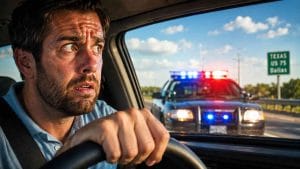
What happens if you cause an accident without insurance? You become personally liable for all damages, face fines of $150 to $5,000+, license suspension, and potential SR-22 requirements. In severe cases, jail time is possible. This guide breaks down the accident without insurance consequences state by state.
Causing a car accident is stressful enough. Causing one without insurance can feel overwhelming. If you are searching for answers right now, here is what you need to know immediately.
When you cause an accident and do not have auto insurance, you become personally liable for all property damage and bodily injuries. There is no insurance company to negotiate, pay claims, or defend you in court. Depending on your state, you also face fines, license suspension, and in severe cases, jail time.
This guide breaks down the consequences state by state, explains what happens if the accident was not your fault, and outlines the steps you should take immediately after an accident without insurance.
Quick Answer: If you caused an accident without insurance, you are personally liable for all damages, face fines of $150–$5,000+, license suspension, and potential SR-22 requirements. Jail time is possible in severe cases.
Accident Without Insurance: The 30-Second Answer
If you caused an accident and have no auto insurance, expect the following:
- Personal liability — You pay all damages and medical bills out of pocket
- Fines — $150 to $5,000+ depending on your state
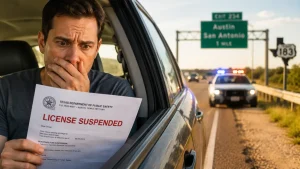
- License suspension — Typically 30 days to 1 year
- Vehicle impoundment — Required in many states
- SR-22 filing — Required for 3 years in most states
- Jail time — Possible in severe or repeat cases
- Lawsuit and wage garnishment — The other party can sue you directly
If this is your first offense in Texas, read our full breakdown of first offense penalties in Texas for state-specific details.
Financial Consequences of an At-Fault Accident With No Insurance
Personal Liability Exposure
Without liability insurance, there is no coverage cap protecting your personal assets. The other driver, their passengers, and even property owners can pursue you directly for:
- Vehicle repair or replacement costs
- Medical bills and ongoing rehabilitation
- Lost wages and pain and suffering
- Legal fees if they sue and win
The average cost of a property-damage-only accident ranges from $4,000 to $15,000. Accidents involving injuries routinely exceed $50,000 to $85,000. In serious injury cases, judgments can reach six figures.
If you cannot pay, the court may place a lien on your property or garnish your wages. Bankruptcy is sometimes the only remaining option after an accident without insurance.
Fines by State
Every state penalizes driving without insurance. Below are the minimum and maximum fines for a first offense after causing an at-fault accident:
| State | Minimum Fine | Maximum Fine | License Suspension | Jail (1st Offense) |
|---|---|---|---|---|
| California | $360 | $1,000+ | Up to 1 year | No |
| Texas | $175 | $4,000 | Up to 2 years | Up to 180 days |
| Florida | $150 | $500 | Up to 3 years | Up to 60 days |
| New York | $150 | $1,500 | Up to 1 year | No |
| Illinois | $500 | $1,000 | 3 months | No |
| Ohio | $160 | $1,000 | 90 days | No |
| Georgia | $200 | $1,000 | 60 days | Up to 12 months |
| Arizona | $500 | $2,500 | Up to 1 year | Up to 6 months |
| Michigan | $200 | $500 | 30 days | No |
| Pennsylvania | $300 | $1,000 | 3 months | No |
Note: These figures reflect first-offense penalties as of 2026. Fines increase significantly for repeat offenses or accidents involving injury. Always verify current penalties with your state DMV.
Criminal Penalties: Can You Go to Jail?
Misdemeanor vs. Felony
Most first-time offenses for causing an accident without insurance are charged as misdemeanors. The typical outcome is a fine plus license suspension.
However, you can face felony charges if any of the following apply:
- The accident caused serious bodily injury or death
- You are a repeat offender
- You were driving under the influence (DUI/DWI)
- You left the scene (hit-and-run)
States With Jail Time for First Offense
While most states reserve jail for repeat or severe cases, the following states allow jail time even on a first offense after an at-fault accident:
States with first-offense jail risk:
- Texas: Up to 180 days
- Florida: Up to 60 days
- Georgia: Up to 12 months
- Arizona: Up to 6 months
If your license is suspended as a result, read our guide on license suspension for no insurance to understand the reinstatement process.
What If the Accident Wasn’t Your Fault?
No-Pay, No-Play States
In 12 states, being uninsured limits or eliminates your right to recover damages — even if the other driver was at fault. These are known as No-Pay, No-Play states:
- California
- Michigan
- New Jersey
- Louisiana
- Alaska
- Iowa
- Kansas
- North Dakota
- Oklahoma
- Oregon
- Delaware
- Indiana
In these states, you may be barred from collecting non-economic damages such as pain and suffering. You can still recover economic damages like medical bills and vehicle repairs in most cases, but the process is harder without an insurer advocating for you.
Learn how uninsured motorist coverage by state protects drivers in these situations.
At-Fault vs. No-Fault States
In at-fault states, the other driver’s insurance should pay for your damages if they caused the accident. But if they are also uninsured, you are left with no coverage at all.
In no-fault states, your own Personal Injury Protection (PIP) would normally cover you. Without insurance, you have no PIP — and no one to bill.
License Suspension and SR-22 Requirements
After an at-fault accident without insurance, most states will suspend your license. The typical suspension period ranges from 30 days to 1 year.
To reinstate your license after an accident without insurance, you will likely need to:
- Pay all fines and reinstatement fees
- File an SR-22 certificate with your state DMV
- Maintain continuous insurance for 3 years
- Carry higher liability limits in some states
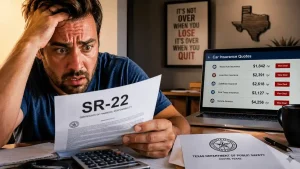
SR-22 insurance is not a separate policy. It is a certificate your insurer files proving you carry state-minimum coverage. Expect your premiums to be 2x to 3x higher than standard rates during this period.
See our complete guide to SR-22 insurance in Texas for a detailed breakdown of costs and filing requirements.
What to Do Immediately After Causing an Accident Without Insurance
If you just caused an accident and do not have coverage, follow these steps in order:
Emergency Action Checklist
- Stop and secure the scene. Never leave. Hit-and-run is a felony in every state.
- Call 911. Report injuries. A police report is mandatory in most states.
- Document everything. Photos, witness info, license plates.
- Exchange information. Do not admit fault at the scene.
- Notify your state DMV. Required within a set timeframe.
- Consult an attorney. Before talking to the other party’s insurer.
- Shop for SR-22 insurance immediately. Start rebuilding your record.
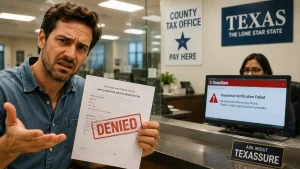
If you are unsure whether you can legally register a vehicle after this incident, read our guide on registering a car without insurance for state-specific rules.
How to Get Insured After an Accident Without Insurance
Getting coverage after an at-fault accident without insurance is possible, but expensive. You are now classified as a high-risk driver.
Here is what to expect:
- Premium increase: 2x to 3x standard rates for 3 years
- SR-22 filing fee: $15 to $50 per month on top of your premium
- Limited carrier options: Not all insurers cover high-risk drivers
- Required coverage: Some states mandate higher liability limits
Tip: High-risk carriers include The General, Dairyland, Direct Auto, and Titan. Shopping multiple quotes is essential — rates vary dramatically for high-risk profiles. Compare state requirements at DMV.org.
Frequently Asked Questions
What happens if you cause an accident without insurance and the other person is injured?
You are personally liable for all medical bills, rehabilitation, lost wages, and pain and suffering. Without an insurance company to negotiate, the injured party or their attorney will pursue you directly. A single serious injury claim can exceed $100,000.
Can I go to jail for causing an accident without insurance?
Yes, in some states. Texas, Florida, Georgia, and Arizona allow jail time for first offenses involving an at-fault accident without insurance. Jail is more likely if the accident caused serious injury, involved DUI, or if you left the scene.
How long will my license be suspended?
Typically 30 days to 1 year for a first offense. Texas allows suspensions up to 2 years. You will need to file an SR-22 and pay reinstatement fees before driving legally again.
Can I be sued if I don’t have insurance?
Yes. Without insurance, there is no coverage cap. The other party can sue you personally for the full amount of their damages, including medical bills, lost wages, vehicle repairs, and pain and suffering.
What if the other driver was also uninsured?
In at-fault states, you may still be liable for their damages if you caused the accident. In No-Pay, No-Play states, your ability to recover your own damages is limited or eliminated. This is why uninsured motorist coverage is critical.
Will my rates go up if I get insurance after an accident?
Yes. Expect 2x to 3x standard rates for 3 years. The accident and the lapse in coverage are both risk factors insurers weigh heavily. SR-22 filing adds an additional monthly fee.
Can I drive someone else’s car after my license is suspended?
No. A suspended license means you cannot legally operate any motor vehicle, regardless of who owns it. Driving on a suspended license is a separate criminal offense in most states.
Bottom Line
Causing an accident without insurance is one of the most expensive mistakes a driver can make. You lose the financial protection of liability coverage, face state penalties, risk license suspension, and open yourself to personal lawsuits.
The best protection is prevention: maintain continuous auto insurance that meets or exceeds your state’s minimum requirements. If you are currently uninsured, get coverage today — before an accident forces the decision for you.
InsuraSpot researches insurance requirements, penalties, and coverage options across all 50 states. This article is for informational purposes only and does not constitute legal or insurance advice. For personalized guidance, consult a licensed insurance agent or attorney in your state.
Last updated: June 13, 2026